
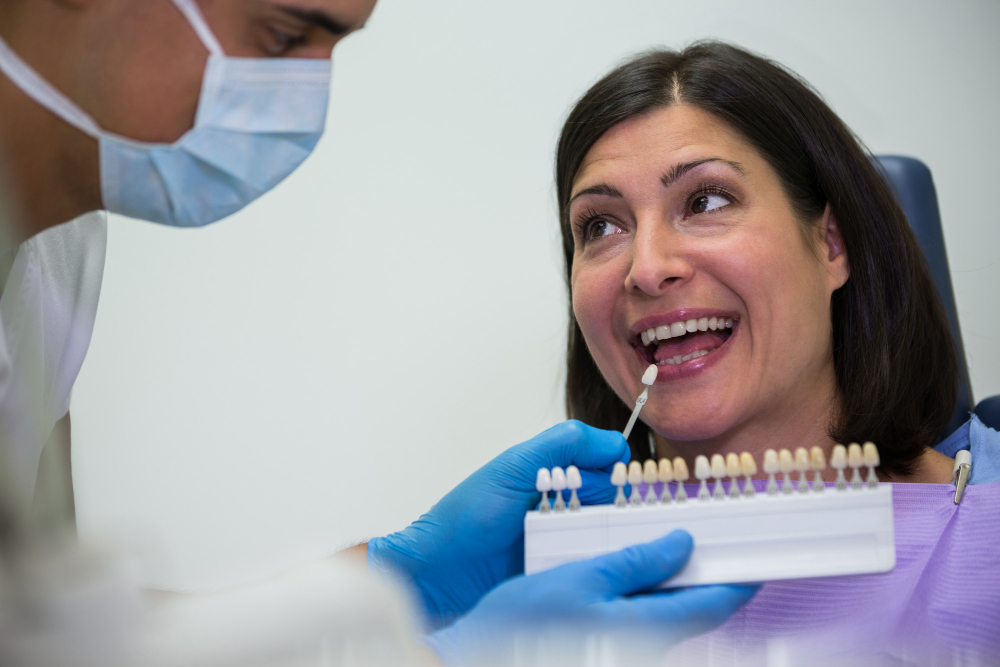
Are you thinking about improving your smile? You may have heard about veneers and crowns. Both are popular dental restoration options. But what is the difference between veneers and crowns? Many people wonder which is the best choice for your smile. In this guide, we will explain veneers vs. crowns, their uses, and how to choose the right one for you.
What Are Veneers?
Veneers are thin shells made from porcelain or resin. Dentists place them on the front surface of your teeth. Usually, they help fix chipped, stained, or slightly crooked teeth. Because veneers are custom-made, they look natural and blend with your other teeth. According to the American Dental Association, veneers are a common choice in cosmetic dentistry.
What Are Dental Crowns?
Dental crowns are caps that cover the entire tooth. Dentists use crowns to restore teeth that are badly damaged or decayed. Crowns can be made from porcelain, metal, or a mix of both. They protect the tooth and improve its shape and strength. In many cases, crowns are used after root canal treatment or when a tooth has a large filling.
Key Differences Between Veneers and Crowns
Pros and Cons of Veneers
Advantages of Veneers
Disadvantages of Veneers
Pros and Cons of Crowns
Advantages of Crowns
Disadvantages of Crowns
How to Choose: Factors to Consider
Choosing between veneers and crowns depends on your needs. First, consider the condition of your tooth. If your tooth is mostly healthy but looks stained or chipped, veneers may be best. However, if your tooth is weak, cracked, or has a large filling, a crown may be safer. Next, think about your budget and insurance coverage. Also, talk to your dentist about your goals and expectations. In many cities, cosmetic dentistry clinics can help you decide.
Procedure and Aftercare
Both veneers and crowns need two or more dental visits. During the first visit, your dentist will prepare your tooth. For veneers, they remove a thin layer from the front of your tooth. For crowns, they shape the whole tooth. Then, the dentist takes an impression and sends it to a lab. At the next visit, your dentist fits and bonds the veneer or crown. After the procedure, brush and floss daily. Avoid biting hard foods. Regular dental check-ups help keep your new smile healthy.
Cost Comparison
The cost of veneers and crowns can vary. Usually, veneers cost between $800 and $2,500 per tooth. Crowns can range from $1,000 to $3,500 per tooth. Prices depend on the material, your dentist’s experience, and your location. For example, cosmetic dentistry in New York City may cost more than in smaller towns. Dental insurance often covers crowns if needed for health reasons, but not veneers, which are usually cosmetic.
Frequently Asked Questions
Conclusion and Next Steps
In summary, both veneers and crowns can improve your smile. However, the right choice depends on your tooth’s health and your goals. For minor changes, veneers may be best. For stronger support, crowns are often better. Always talk to your dentist before making a decision. Consult Dr. Sudeep Bhalerao to find out whether veneers or crowns are right for your smile.